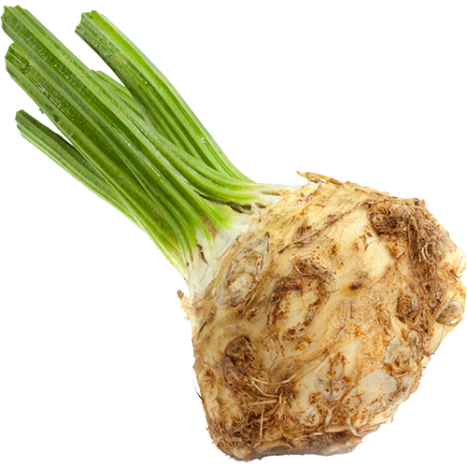
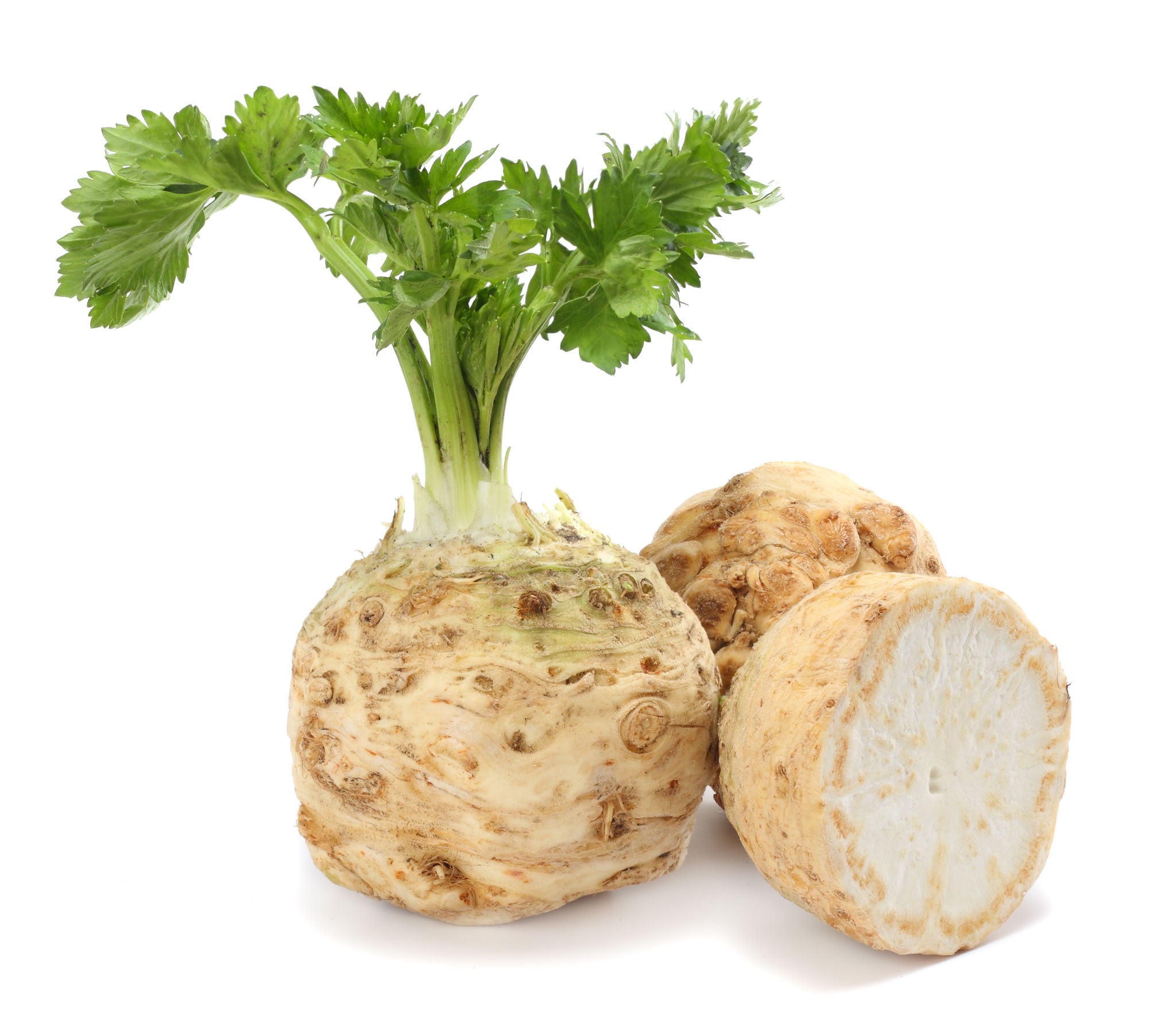
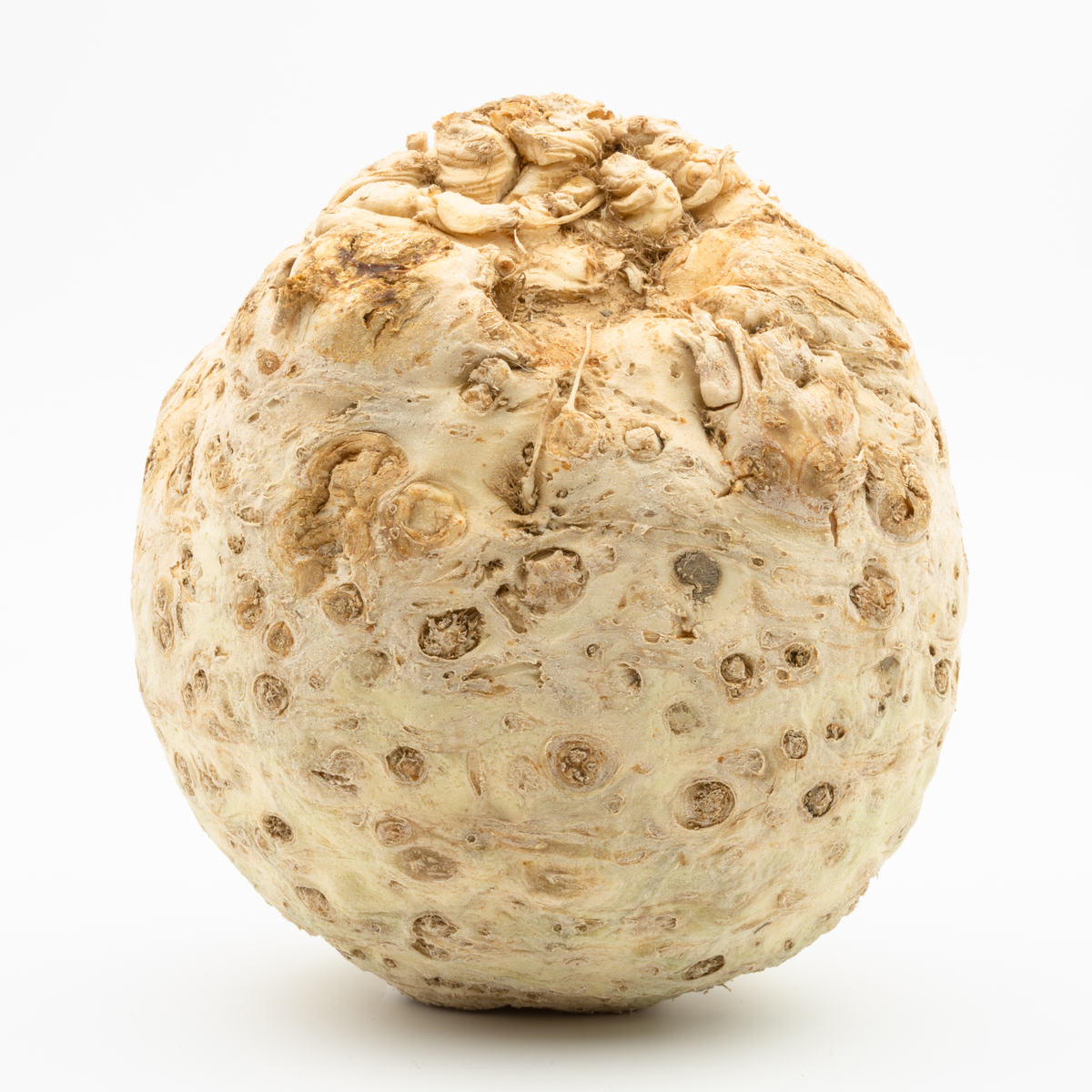
Celeriac (Apium graveolens Rapaceum Group, synonyms Apium graveolens Celeriac Group and Apium graveolens var. rapaceum), also called celery root, knob celery, and turnip-rooted celery (although it is not a close relative of the turnip), is a group of cultivars of Apium graveolens cultivated for their edible bulb-like hypocotyl, and shoots.
Celeriac is widely cultivated in the Mediterranean Basin and in Northern Europe. It is also but less commonly cultivated in North Africa, Siberia, Southwest Asia, and North America.
History
Wild celery (Apium graveolens), from which both celeriac and celery derive, originated in Europe and the Mediterranean Basin. It was mentioned in the Iliad and Odyssey as selinon. Celeriac was grown as a medicinal crop in some early civilizations.
Culinary use
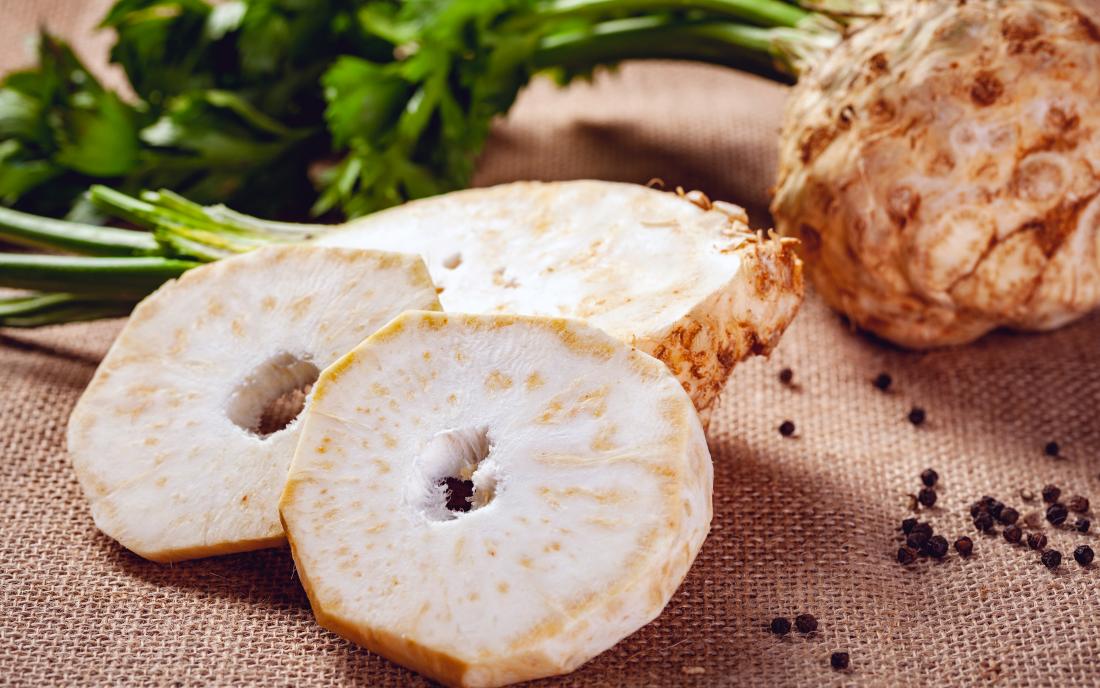
Typically, celeriac is harvested when its hypocotyl is 10 to 14 centimetres (4 to 5 1⁄2 inches) in diameter. This is white on the inside, and can be kept for months in winter. It often serves as a key ingredient in soup. It can also be shredded and used in salads. The leaves are used as seasoning; the small, fibrous stalks find only marginal use.
The shelf life of celeriac is approximately six to eight months if stored between 0 and 5 °C (32 and 41 °F), and not allowed to dry out. However, the vegetable will tend to rot through the centre if the finer stems surrounding the base are left attached. The centre of celeriac becomes hollow as it ages, though even freshly harvested celeriacs can have a small medial hollow. The freshness will also be obvious from the taste; the older it is, the weaker the celery flavour.
See also
- List of vegetables
- List of root vegetables
Explanatory notes
References
External links
- Nutritional Summary for Celeriac , cooked, boiled, drained, without salt
- "RHS Award of Garden Merit: Asparagus, Celeriac , chard, Chinese cabbage, fennel, melon, pak choi, rhubarb 2011". Archived from the original on 8 July 2013. Retrieved 31 January 2012. (306 KB)